


July 2026
Fragrances are more than just a pleasant scent. They enhance the sensory experience, strengthen brand identity, and influence consumer perception. According to the International Fragrance Association (IFRA), fragrance ingredients are developed and used under rigorous international safety standards to ensure they are suitable for cosmetic applications. Meanwhile, consumer behavior research continues to demonstrate that scent plays a significant role in emotional engagement, product perception, and long-term brand recall. This article explores the role of fragrances, their key benefits, and the essential factors manufacturers should consider when selecting the right fragrance solution.
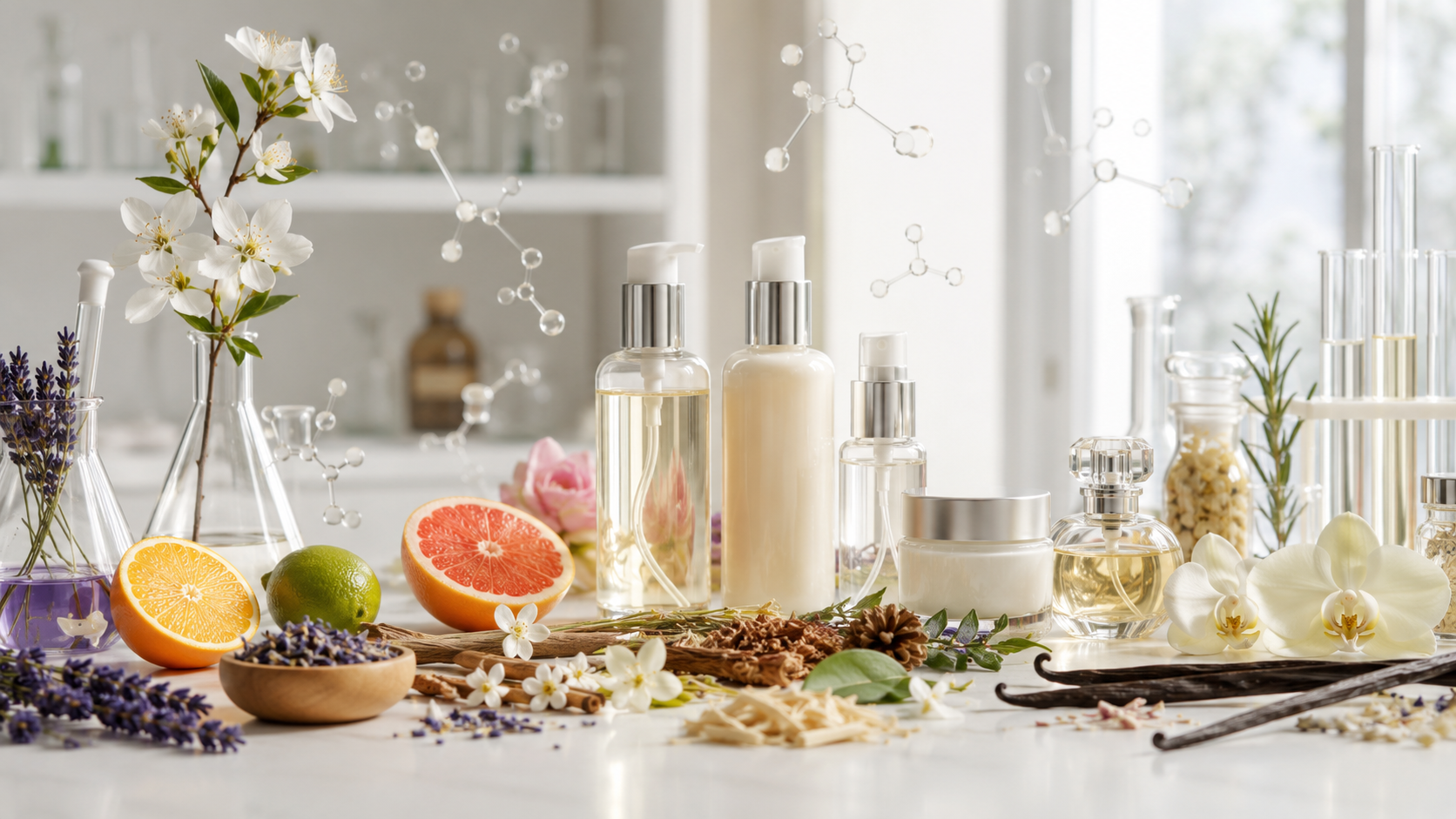
Fragrances: The emotional connection between consumers and beauty products
What is fragrance?
Fragrances (commonly labeled as Fragrance or Parfum) refer to a carefully formulated blend of aromatic ingredients designed to provide a distinctive scent to cosmetic and personal care products. Beyond imparting a pleasant aroma, fragrance serves several important functions, including masking undesirable odors from raw materials and enhancing the overall sensory experience of the finished product.
Fragrance compositions may consist of naturally derived ingredients, synthetic aroma molecules, or a combination of both. Each formulation is carefully balanced to achieve the desired olfactory profile while maintaining compatibility with the product’s formulation, stability requirements, and regulatory standards.
Today, fragrances are widely incorporated into products such as:
- Shampoos and conditioners
- Body washes
- Lotions and creams
- Facial skincare
- Perfumes
- Household and personal care products
Rather than functioning as a standalone ingredient, fragrance is an integral part of the overall product experience—working alongside texture, appearance, and performance to create a memorable impression for consumers.
Fragrances: Beyond a scenting ingredient
Many people assume that fragrance exists solely to make a product smell pleasant. In reality, fragrance has evolved into one of the most influential components of modern cosmetic formulation. Within today’s beauty industry, fragrance contributes to what is often described as a multi-sensory experience. It stimulates not only the sense of smell but also emotional perception, product satisfaction, and brand recognition. A thoughtfully designed fragrance can transform an everyday skincare or personal care routine into a memorable sensory ritual.
Fragrance development therefore involves much more than selecting an appealing scent. Perfumers carefully combine olfactory families and aromatic notes to evoke specific emotional responses, reinforce product positioning, and create a distinctive brand identity. From the consumer’s perspective, scent often becomes one of the strongest triggers of memory. A familiar fragrance can instantly remind users of a favorite product or a trusted brand, making fragrance one of the most powerful tools for building long-term customer loyalty.
In this sense, cosmetic fragrance serves as an emotional bridge between consumers and products—connecting functional performance with memorable sensory experiences.
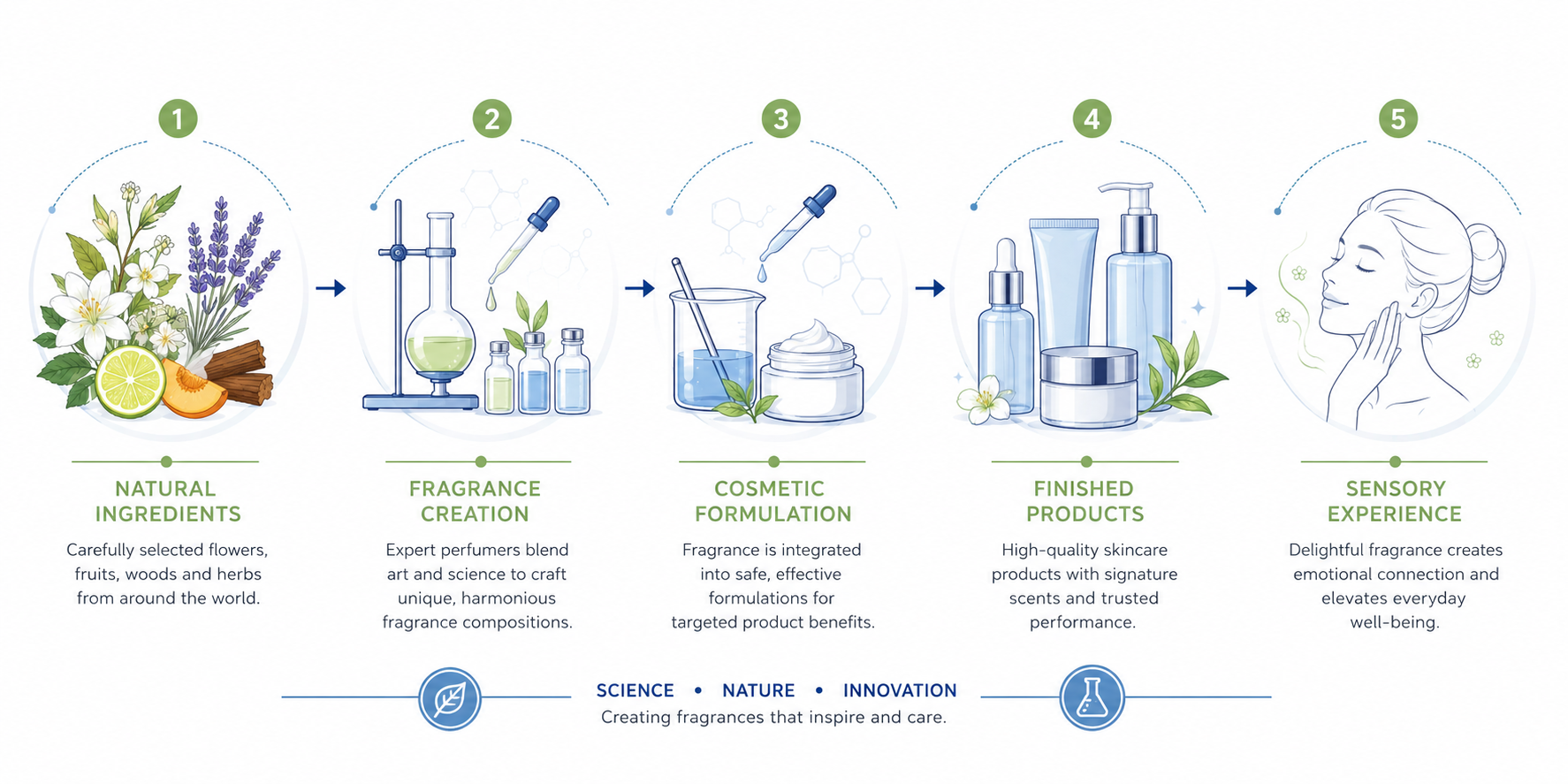
Fragrances: From ingredients to finished products
Why is fragrance essential in products?
Fragrance does much more than add a pleasant scent to a product. It plays a strategic role in enhancing the consumer experience, strengthening brand differentiation, and increasing product appeal throughout its lifecycle.
Masking unpleasant base odors
Many cosmetic formulations contain functional ingredients—such as retinoids, botanical extracts, proteins, or active compounds—that naturally possess strong or undesirable odors. A well-designed fragrance helps neutralize these base notes while creating a balanced and pleasant olfactory profile. The result is a product that delivers both functional performance and a more enjoyable user experience without compromising formulation quality.
Enhancing the sensory experience
Consumers increasingly expect cosmetic products to deliver more than efficacy alone. Fragrance has become an integral part of the overall sensory journey, influencing how a product is perceived from the first use.
A carefully crafted scent can evoke feelings of comfort, freshness, relaxation, or luxury, transforming daily skincare and personal care routines into enjoyable rituals. This emotional connection often contributes to higher product satisfaction and a more memorable brand experience.
Building brand identity through signature fragrance
In today’s highly competitive beauty market, fragrance has become a powerful branding asset.
Many successful brands develop a signature fragrance that consumers instantly associate with their products. Even without seeing the packaging or logo, a familiar scent can trigger brand recognition and reinforce emotional connections built over time.
For manufacturers, fragrance therefore represents more than a formulation component—it becomes part of the brand’s identity and long-term positioning strategy.
Encouraging consumer loyalty
Fragrance significantly influences repurchase behavior. Consumers often return to products not only because they perform well, but also because they enjoy the emotional experience created by the scent. A fragrance that evokes comfort, confidence, or familiarity can become a compelling reason for repeat purchases, even when competing products offer similar functional benefits.
Developing fragrances that resonate with target consumers is therefore an important strategy for improving customer retention and long-term brand loyalty.
Diverse applications
Fragrances are incorporated into a wide range of personal care and beauty products, including:
- Shampoo and conditioner
- Body wash and shower gel
- Facial cleansers
- Body lotions and creams
- Facial skincare products
- Hair care and styling products
- Deodorants
- Fine fragrances and perfumes
Regardless of the product category, selecting the appropriate fragrance is essential to delivering a consistent sensory experience while reinforcing the intended brand positioning.
Types of fragrances
Fragrances are generally classified into two main categories: natural fragrances and synthetic fragrances. Each offers distinct characteristics, advantages, and formulation considerations depending on the product concept, target consumers, and performance requirements.
Understanding the differences between these two fragrance types enables cosmetic manufacturers to develop products that achieve the desired sensory profile while meeting market expectations and regulatory requirements.
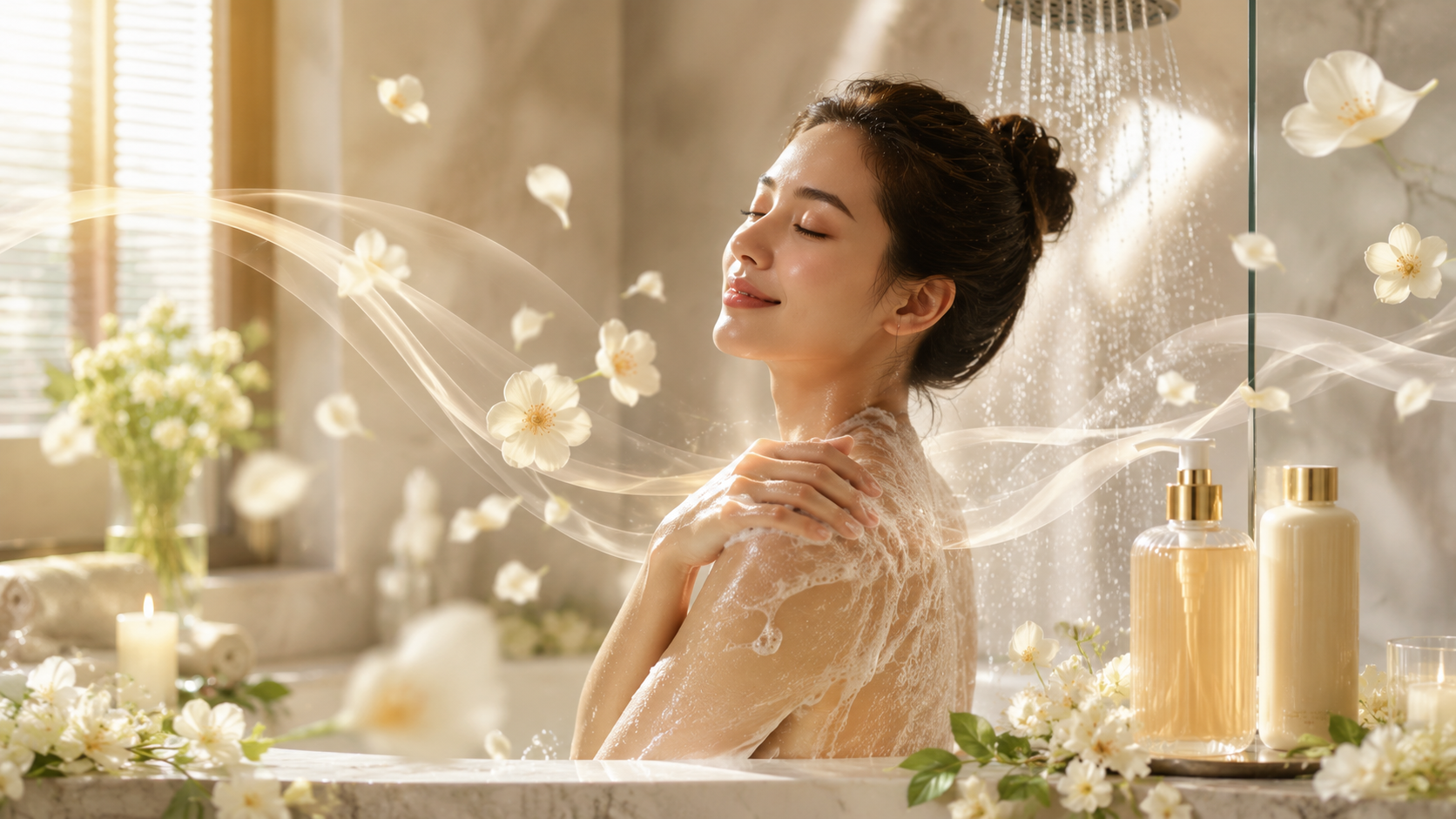
Fragrances enhance customers’ experience and emotions
Natural fragrances
Natural fragrances are derived from botanical sources such as flowers, leaves, fruits, woods, resins, and spices. These ingredients are valued for their authentic and sophisticated scent profiles, often delivering a fresh and naturally inspired sensory experience. Products formulated with natural fragrances also appeal to consumers seeking beauty products with a more nature-oriented image, supporting the growing demand for clean and naturally positioned cosmetics.
However, it is important to recognize that natural does not automatically mean safer. Certain naturally occurring fragrance components—including limonene, citral, and linalool—are recognized fragrance allergens and must be managed in accordance with international cosmetic regulations.
Whether a fragrance is natural or synthetic, compliance with recognized safety standards remains the primary consideration in fragrance development.
Synthetic fragrances
Synthetic fragrances are created through advanced aroma chemistry rather than being extracted directly from natural materials. Modern fragrance science enables perfumers to accurately recreate naturally occurring scents while also developing entirely new olfactory accords that cannot be obtained from botanical sources alone. This significantly expands creative possibilities for product developers seeking distinctive fragrance identities.
Synthetic fragrance ingredients also offer several technical advantages, including excellent fragrance stability, longer-lasting scent performance, and greater consistency across production batches. Their performance is generally less affected by heat, light, or storage conditions, making them well suited for a wide range of cosmetic formulations.
In addition, synthetic aroma molecules provide perfumers with greater flexibility to fine-tune fragrance intensity and create unique scent signatures tailored to specific brands and consumer preferences.
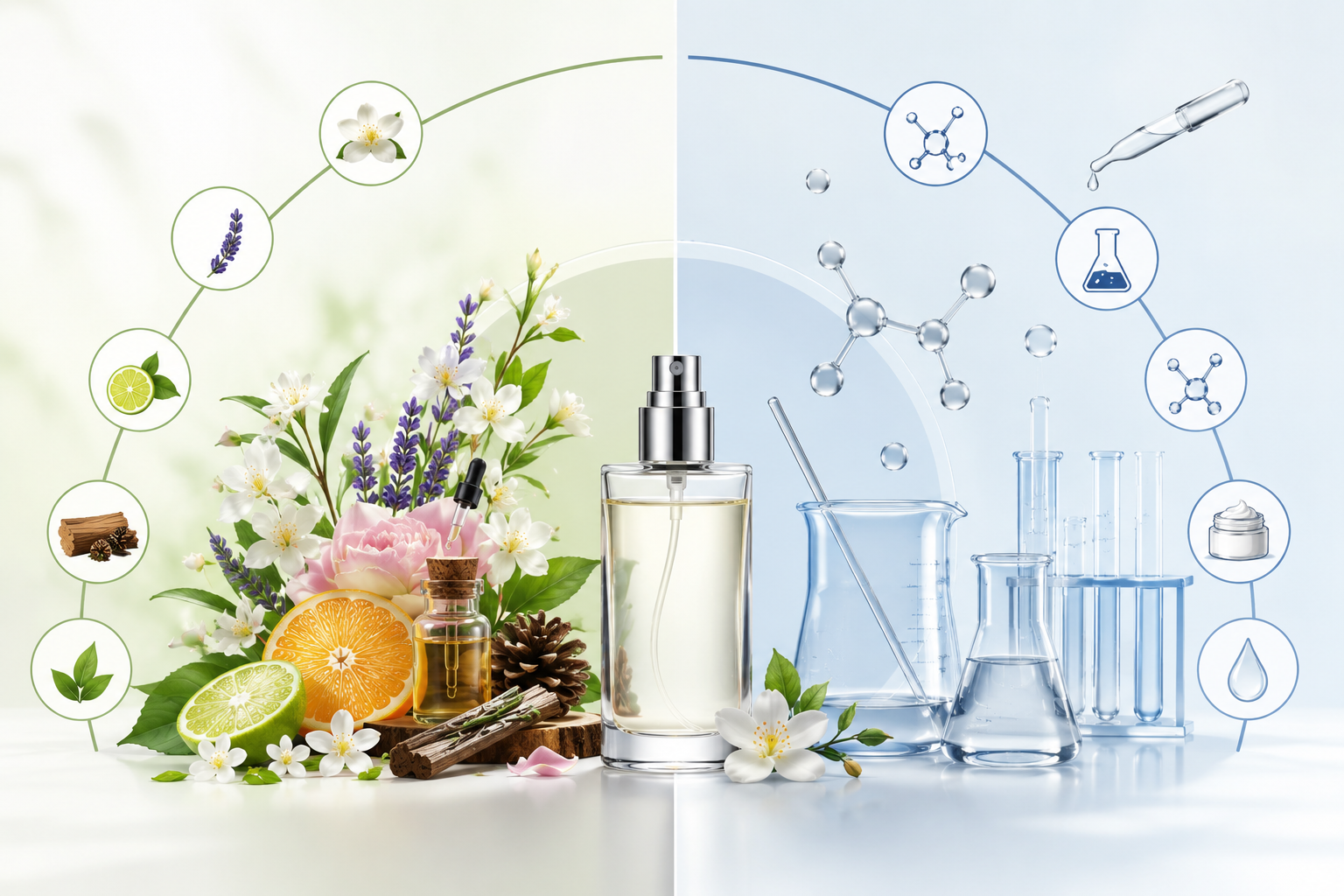
Fragrances have two main types: Natural and synthetic
Key considerations when selecting a cosmetic fragrance
Choosing the right fragrance involves far more than finding an appealing scent. Cosmetic manufacturers must evaluate multiple technical and commercial factors to ensure the fragrance aligns with the product’s performance requirements, brand positioning, and regulatory obligations.
Key considerations include:
- Alignment with brand positioning and target consumers
- Formulation compatibility and stability
- Appropriate fragrance longevity
- Compliance with international regulations
- Comprehensive technical documentation, including IFRA Certificates, Certificates of Analysis (COA), Safety Data Sheets (SDS), and other relevant compliance documents.
- R&D capabilities and customization expertise
Beyond these technical considerations, consumer safety remains one of the most important factors when selecting cosmetic fragrances.
Are cosmetic fragrances safe?
When used in accordance with international regulations and recommended dosage levels, cosmetic fragrances are considered safe for their intended applications.
Fragrance ingredients used in legally manufactured cosmetic products undergo rigorous safety evaluations conducted by the Research Institute for Fragrance Materials (RIFM) and are formulated in compliance with the International Fragrance Association (IFRA) Standards.
As with many cosmetic ingredients, adverse reactions may occur in individuals with highly sensitive skin or compromised skin barriers. However, when properly formulated and used as intended, fragrance ingredients remain safe for the vast majority of consumers.
Frequently asked questions
Is fragrance the same as essential oil?
No.
Essential oils are only one of many raw materials that may be used in fragrance creation. A cosmetic fragrance is typically a carefully balanced composition consisting of multiple natural ingredients, synthetic aroma molecules, or a combination of both to achieve a specific olfactory profile, stability, and performance
Are “fragrance” and “Parfum” the same?
The two terms are closely related but are used according to different labeling conventions.
In cosmetic ingredient lists, both Fragrance and Parfum indicate the fragrance composition added to a product. However, the terminology varies depending on regional cosmetic regulations.
- Fragrance is commonly used on cosmetic labels in the United States and many international markets.
- Parfum, derived from French, is widely used under European cosmetic labeling regulations.
Although the wording differs, both terms generally refer to the product’s fragrance composition.
Should consumers choose fragrance-free?
The answer depends on individual needs and product applications.
For consumers with a history of fragrance sensitivity or extremely reactive skin, fragrance-free products may be an appropriate option. However, for most consumers, fragrance remains an important part of the product experience, contributing to comfort, enjoyment, and overall satisfaction during daily use.
Can fragrances cause skin irritation?
Some individuals with highly sensitive skin may experience reactions to certain fragrance ingredients.
However, the vast majority of fragrance materials used in commercially manufactured cosmetic products comply with internationally recognized safety standards and are formulated for safe use within approved concentration limits.
Proper formulation, ingredient selection, and regulatory compliance are essential to minimizing potential risks while delivering an enjoyable consumer experience.
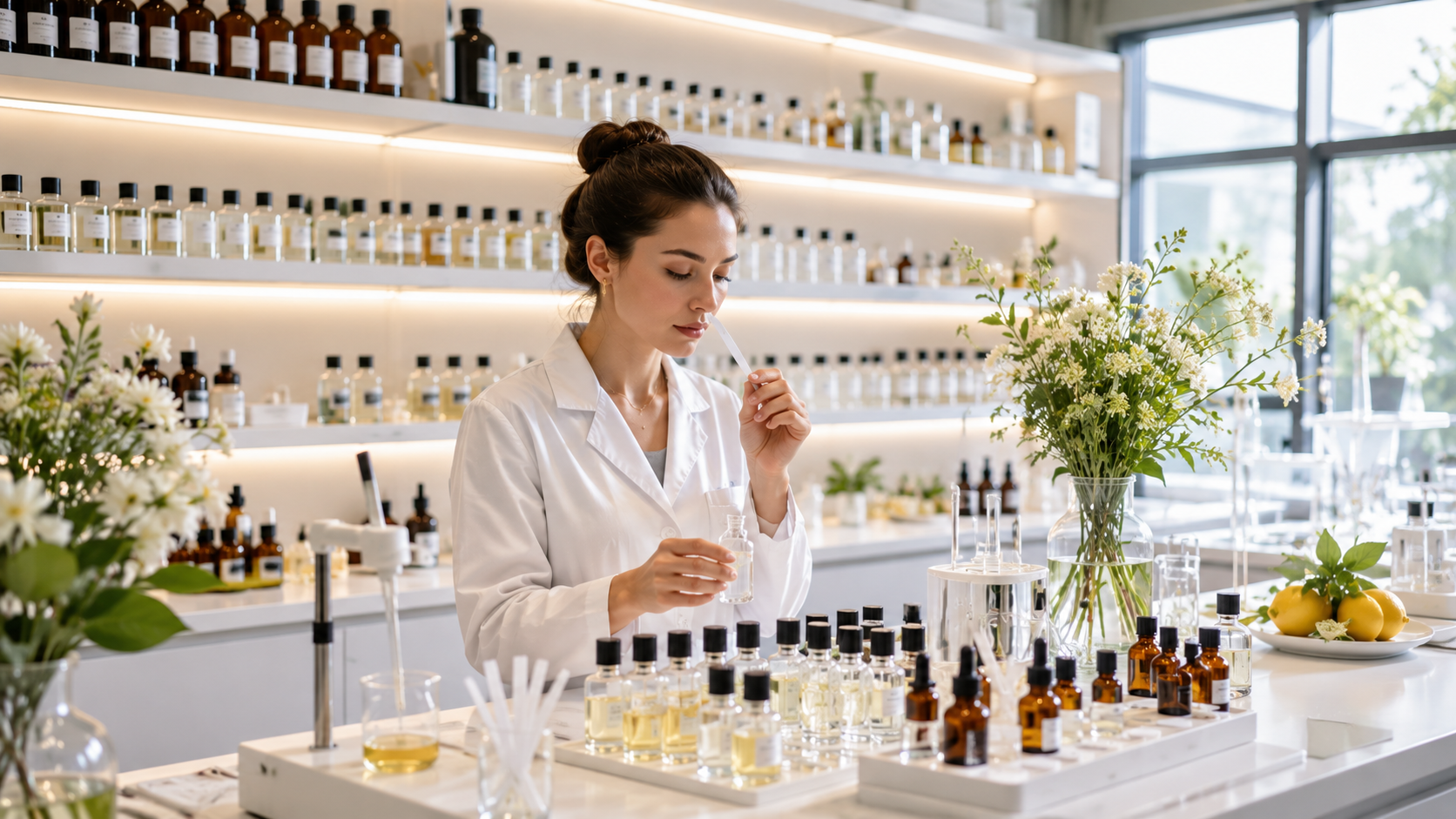
The R&D team plays a crucial role in developing flavor solutions tailored to specific formulations and target markets.
Fragrance is one of the defining elements of a successful cosmetic product. Beyond creating an appealing scent, it shapes consumer perception, strengthens brand recognition, and encourages long-term customer loyalty. Developing a successful fragrance therefore requires more than creative expertise—it calls for a trusted partner with deep market knowledge, strong research and development capabilities, and a thorough understanding of international quality and regulatory standards.

Viet Huong Factory, featuring a modern equipment system, is located in Long Hau Industrial Park.
With more than 30 years of experience in the fragrance industry, Viet Huong partners with cosmetic manufacturers to develop fragrance solutions tailored to diverse product categories, formulation requirements, and regional market preferences.
Driven by continuous innovation and market insight, our R&D team works closely with customers to create distinctive fragrance profiles that help brands stand out in an increasingly competitive beauty market.
Looking for a fragrance solution that differentiates your next cosmetic product? Contact Viet Huong today to explore customized fragrance developments designed to meet your brand vision and market needs.