


July 2026
The irresistible aroma of roasted foods is not created by chance. It is the result of a series of complex chemical reactions that occur during heating, generating hundreds of aroma compounds responsible for the distinctive smell, appealing color, and rich flavor profile of cooked foods.
But what truly creates the characteristic aroma of roasted foods?
The answer begins with the Maillard reaction—a fundamental chemical process that has become one of the cornerstones of modern food science. Understanding this reaction not only explains why roasted foods are so appealing but also provides the scientific foundation for many of today’s flavour innovation technologies.
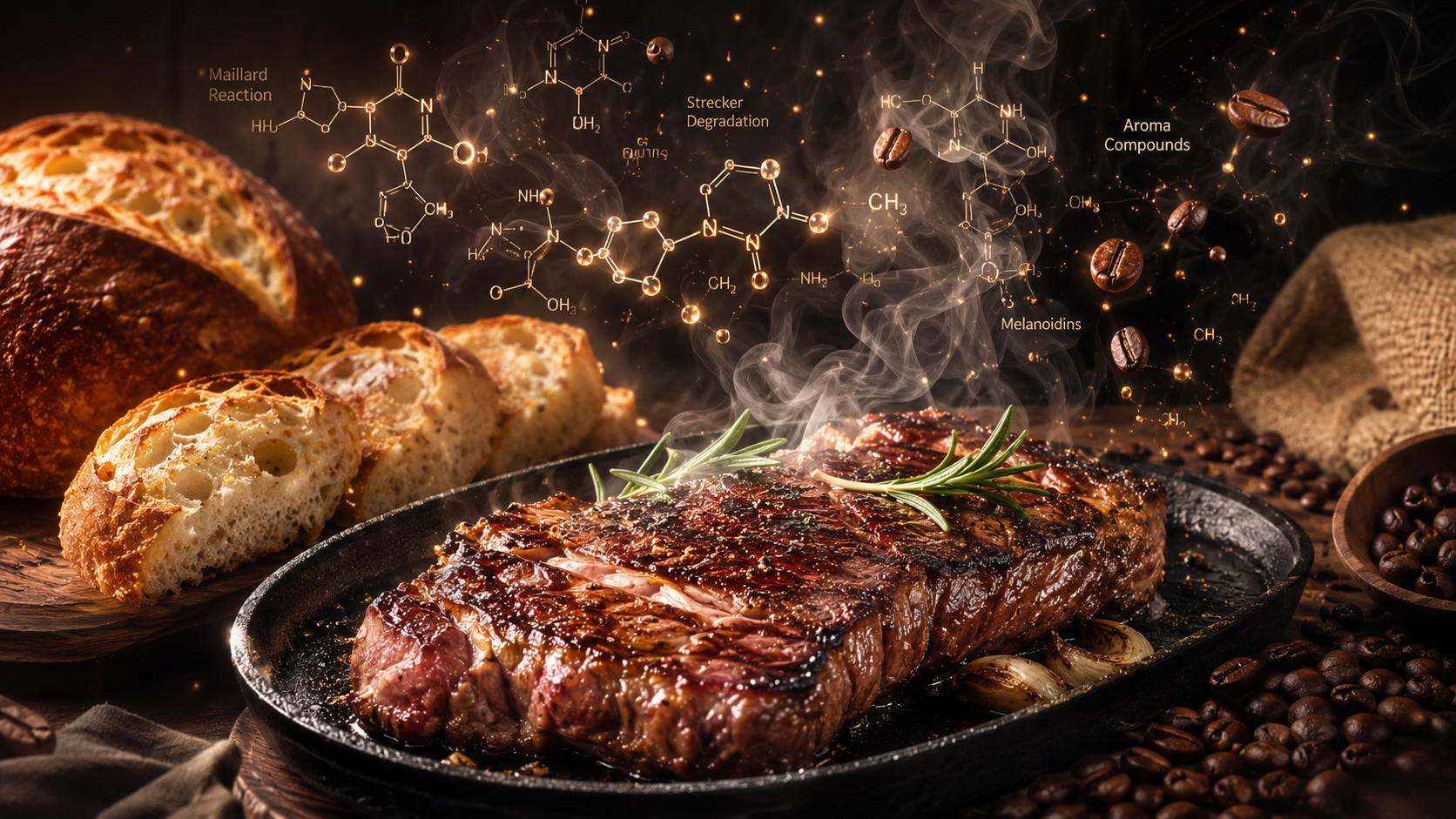
The irresistible aroma of roasted foods
What creates the aroma of roasted foods?
“Why does a freshly seared steak or a loaf of bread straight from the oven smell so irresistibly?”
Simply walking past a bakery or a grilled meat stall is often enough to capture our attention. Even before we see the food, its aroma stimulates our sense of smell, triggers appetite, and creates an immediate desire to taste it. This response is deeply rooted in human sensory perception.
Interestingly, what we perceive is not the inherent aroma of the raw ingredients themselves, but rather the result of chemical transformations that occur during cooking. When food is heated under appropriate conditions, naturally occurring components such as proteins and reducing sugars begin reacting with one another, producing a wide range of aroma compounds associated with roasted, grilled, caramelized, and toasted notes. These newly formed compounds define the characteristic flavour identity of many of the foods we enjoy every day.
This phenomenon is not limited to grilled meat. It can also be found in many familiar foods, including:
- The golden-brown crust of freshly baked bread
- The rich aroma of roasted coffee
- The buttery notes of baked cookies
- Fried garlic and crispy shallots
- Roasted snack seasonings
- Instant noodle broth
- Savoury sauces and seasonings
Although our olfactory perception occurs within seconds, the chemistry behind these aromas is driven by one of the most important reactions in food science—the Maillard reaction.
The Maillard reaction: The architect behind food aroma
The Maillard reaction is one of the most significant chemical reactions responsible for creating the aroma compounds that define cooked food. Understanding how this reaction works is the first step toward explaining why roasted foods are so appealing—and why it has become the scientific foundation for many modern flavour technologies.
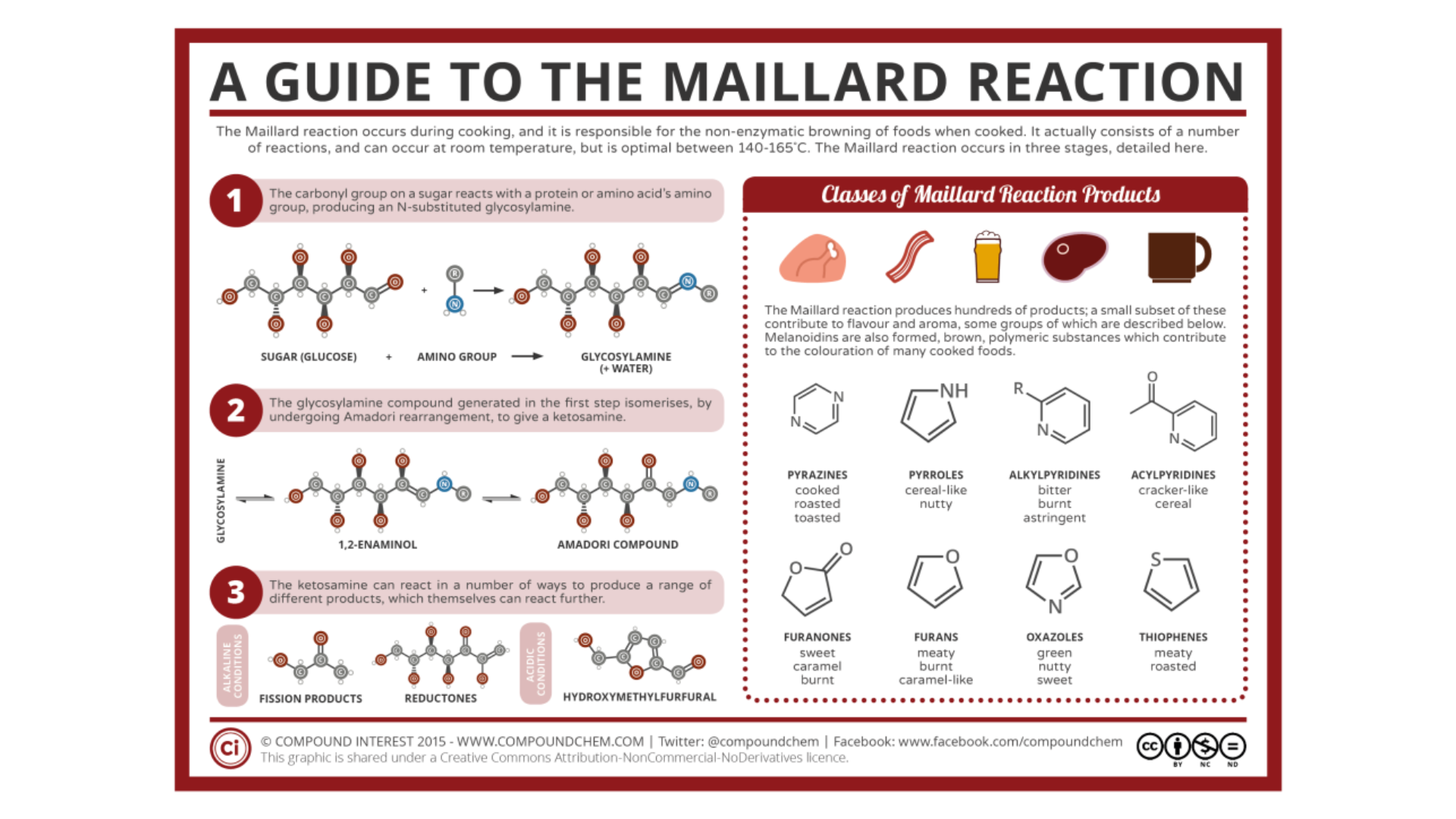
Maillard reaction – “The architect” creates food aroma
What happens when food is heated?
When food is exposed to heat, reducing sugars react with free amino acids, initiating a complex sequence of chemical reactions known as the Maillard reaction.
First described in 1912 by French chemist Louis-Camille Maillard, this reaction is now recognized as one of the most fundamental processes in food science. It plays a crucial role in developing the color, aroma, and flavour of a wide variety of cooked foods. In most food applications, the reaction is particularly active between 140°C and 165°C, although it may begin at lower temperatures depending on factors such as moisture content, pH, and ingredient composition. During this process, hundreds of volatile aroma compounds are formed, creating the attractive golden-brown appearance and the distinctive roasted, grilled, caramelized, toasted, and nutty notes that consumers associate with freshly cooked foods. This is precisely why ingredients that have only a mild aroma in their raw state become significantly more appealing after roasting, grilling, baking, or pan-searing.
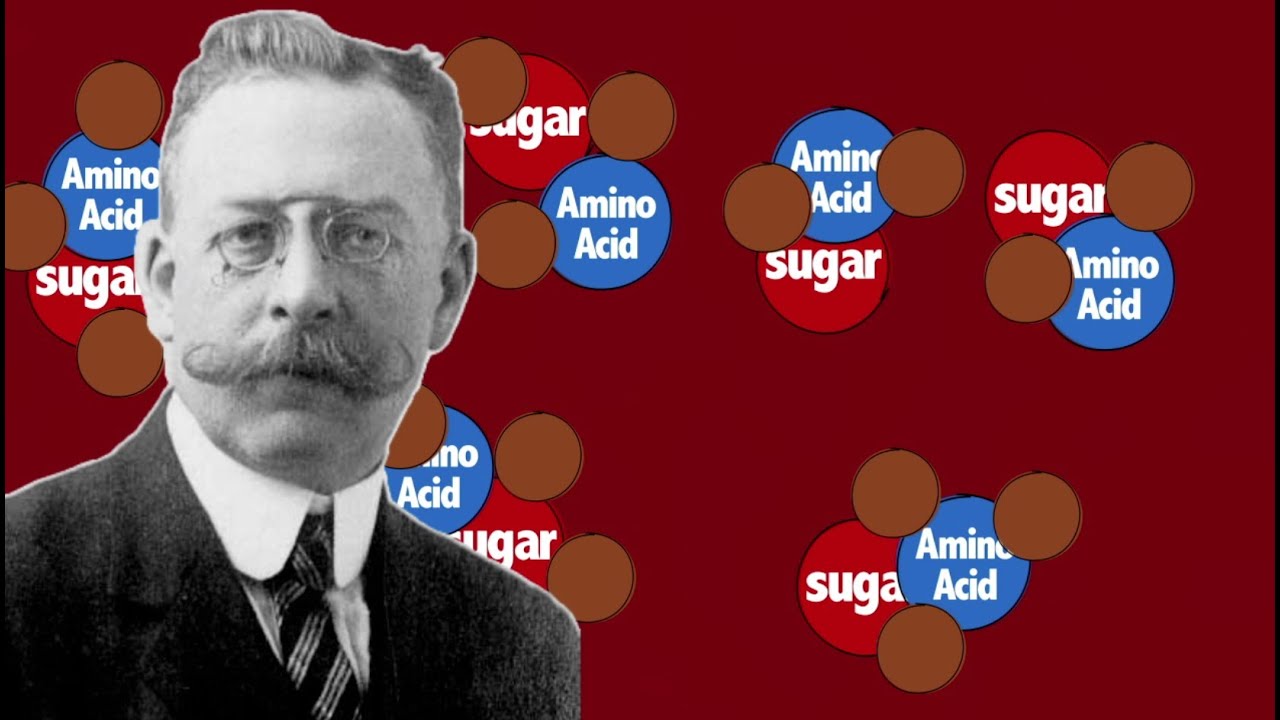
Louis-Camille Maillard – French Chemist, who first described maillard reaction in 1912
The Maillard reaction: More than just browning
Many people associate the Maillard reaction simply with the browning of food during cooking. In reality, the color change is only the most visible outcome. Its greatest contribution lies in the formation of distinctive aroma compounds that give cooked foods their characteristic sensory identity.
Depending on the raw materials, heating temperature, processing time, and manufacturing conditions, the Maillard reaction can generate a wide variety of aroma profiles, including:
- Roasted notes
- Grilled notes
- Meaty notes
- Brothy notes
- Caramelized notes
- Toasted notes
- Nutty notes
Rather than existing independently, these aroma notes interact to create the depth, complexity, and balance that define the overall flavour profile of cooked foods. This intricate combination of aroma compounds is what transforms simple ingredients into products with a rich and memorable sensory experience.
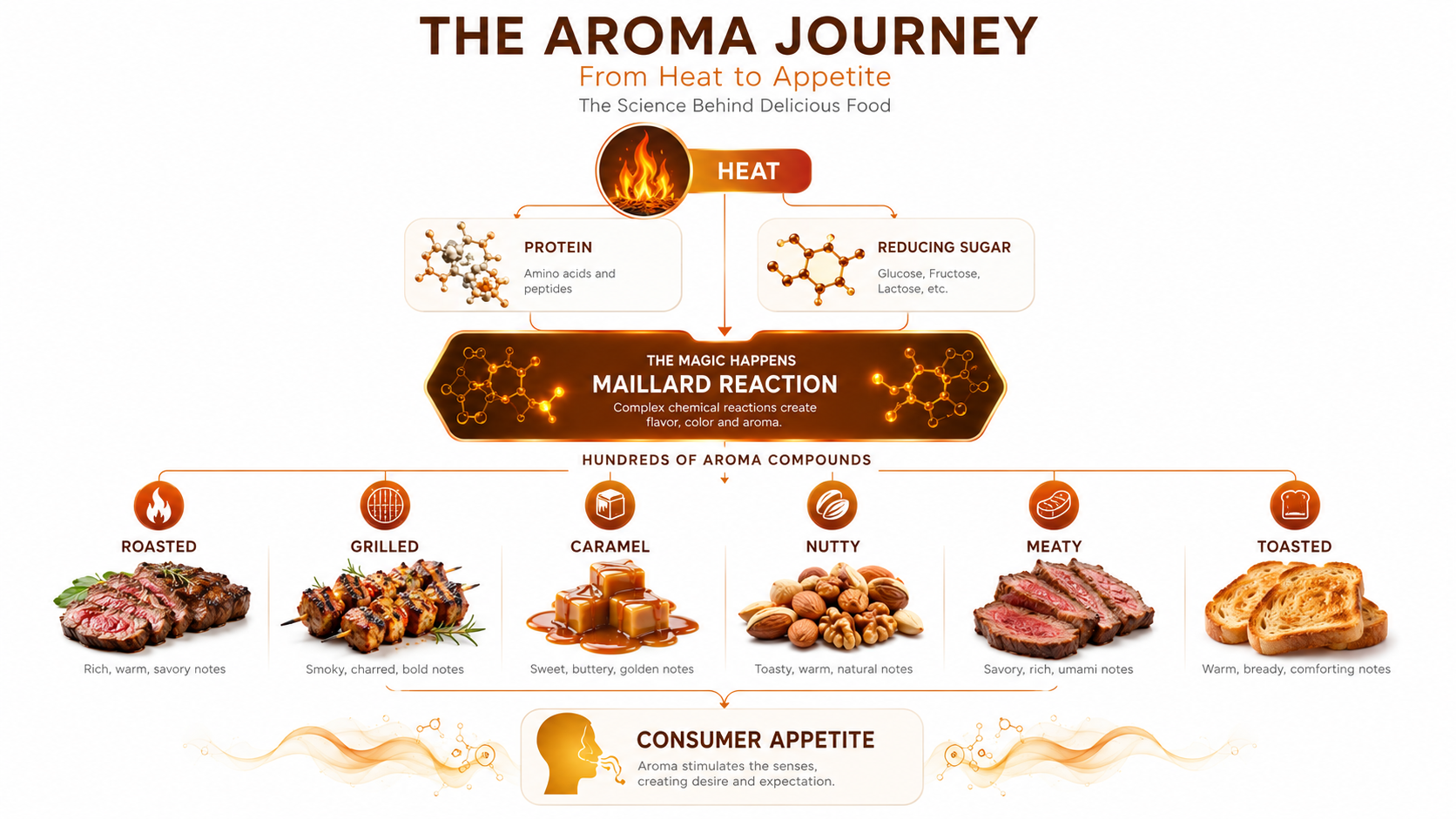
Maillard reaction creates the aroma and color of food
From Maillard reaction to Maillard aroma
If the Maillard reaction describes the chemical process that generates aroma compounds, then Maillard aroma refers to the sensory characteristics consumers ultimately perceive. In other words, when enjoying a grilled steak, consumers do not consciously recognize hundreds of individual volatile compounds. Instead, the brain integrates these complex aroma signals into a unified sensory impression—grilled meat, roasted notes, rich broth, caramelized nuances, and savoury umami. This overall sensory perception is what the food industry commonly refers to as Maillard aroma.
A common misconception is that Maillard aroma is exclusive to grilled meat or roasted products. In reality, depending on the ingredients and processing conditions, the Maillard reaction can produce a broad spectrum of aroma profiles, each contributing to different food applications across multiple product categories.
Is Maillard aroma the same as food flavour?
Not exactly. Maillard aroma is a sensory term used to describe the aroma characteristics naturally generated through the Maillard reaction—or flavour characteristics intentionally designed to replicate those sensory attributes. Food flavour, on the other hand, is a formulated ingredient developed to enhance, modify, or recreate flavour perception in food products.
A flavour formulation may be designed to deliver authentic Maillard aroma characteristics, but the two concepts are not interchangeable.
Maillard aroma describes the sensory outcome, whereas food flavour refers to the functional flavouring solution developed to achieve that outcome consistently in commercial food applications. Understanding this distinction is particularly important for food manufacturers and R&D teams seeking to balance sensory authenticity with manufacturing efficiency.
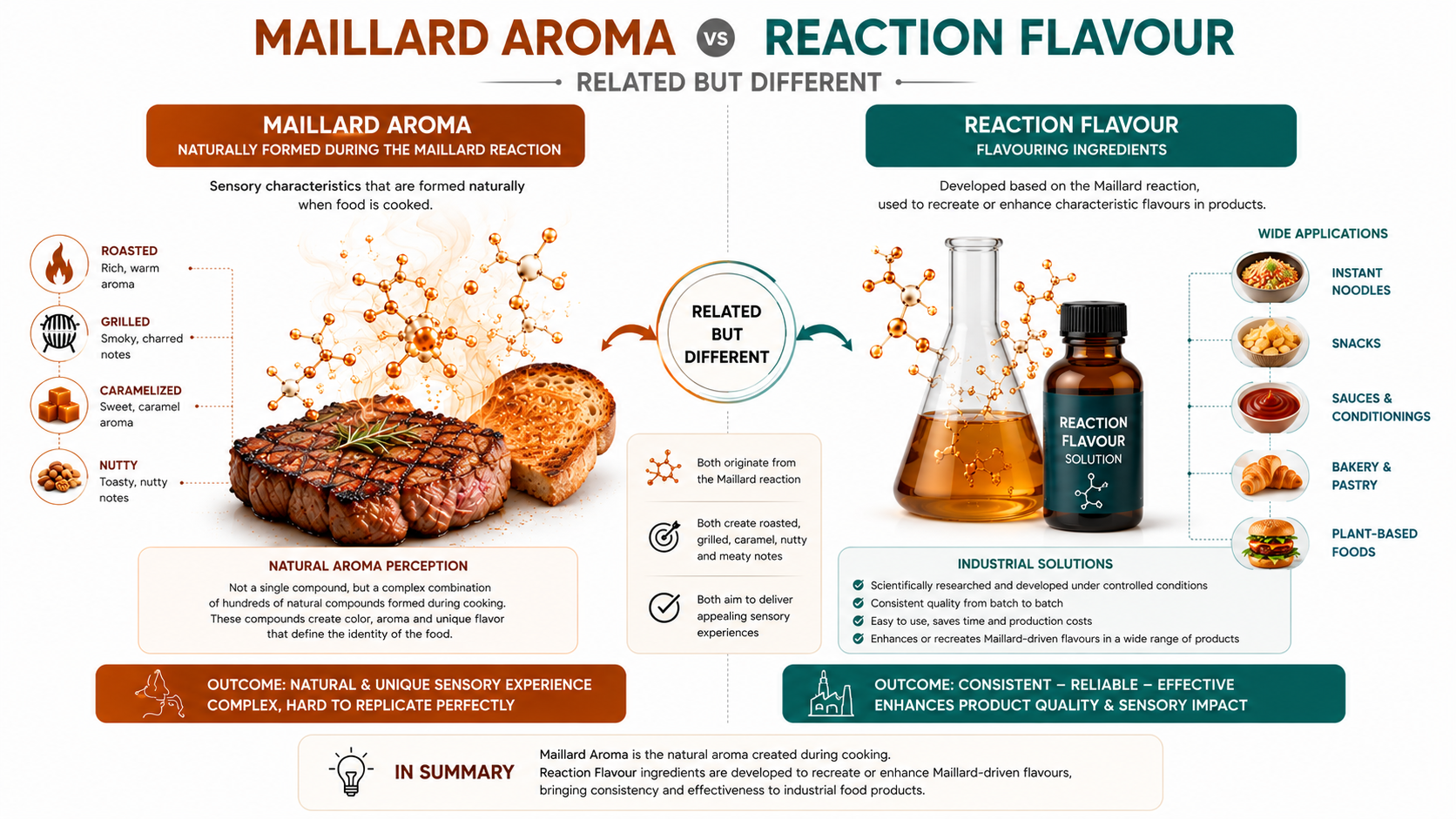
Maillard aroma and reaction flavour – two concepts are not interchangeable
Reaction flavour – Recreating authentic cooked flavours
While the Maillard reaction naturally generates aroma compounds during cooking, Reaction Flavour is a flavour technology developed to consistently reproduce or enhance those desirable sensory characteristics in commercial food production. It has become one of the most important flavour technologies for helping food manufacturers deliver authentic cooked-food profiles while maintaining consistency, efficiency, and scalability.
Rather than relying solely on roasting, grilling, or simmering during production, manufacturers can use Reaction Flavour to achieve targeted sensory profiles with greater process control and batch-to-batch consistency.
What is reaction flavour?
Reaction flavour is a food flavouring produced through carefully controlled Maillard reactions involving amino acids, reducing sugars, peptides, and other naturally derived ingredients under precisely managed processing conditions. Temperature, reaction time, ingredient composition, and processing environment are all carefully optimized to generate specific flavour compounds that closely resemble those formed during actual cooking.
The objective of Reaction flavour is not to create an artificial aroma.
Instead, it is designed to faithfully recreate the authentic flavour characteristics naturally developed through thermal processing, delivering the sensory experience consumers associate with freshly cooked foods. This controlled approach enables flavour developers to reproduce complex cooked-food profiles with a high level of precision while ensuring consistency across large-scale manufacturing.
Why is reaction flavour important in modern food manufacturing?
Food manufacturers can certainly generate desirable aromas by directly roasting, grilling, baking, or simmering ingredients.
However, under industrial production conditions, relying exclusively on these processes presents several challenges:
- Maintaining consistent flavour quality across production batches
- Managing higher processing costs and energy consumption
- Extending production time
- Achieving uniform flavour intensity throughout large-scale manufacturing
- Reproducing identical sensory profiles despite variations in raw materials
For these reasons, Reaction flavour has become an indispensable tool for modern product development. By incorporating Reaction flavour into a formulation, R&D teams gain greater control over flavour performance while improving manufacturing efficiency and ensuring consistent product quality.
A well-designed Reaction Flavour can help manufacturers:
- Enhance flavour depth and overall richness.
- Recreate roasted, grilled, caramelized, or brothy notes that may not be fully developed during processing.
- Improve the overall sensory experience by delivering a more authentic cooked-food
- Maintain batch-to-batch consistency, even under varying production
- Support reduced-salt, reduced-sugar, and plant-based formulations while preserving savoury intensity and consumer acceptance.
As consumer expectations continue to evolve, Reaction flavour has become an increasingly valuable solution for developing products that combine authentic taste with manufacturing efficiency.
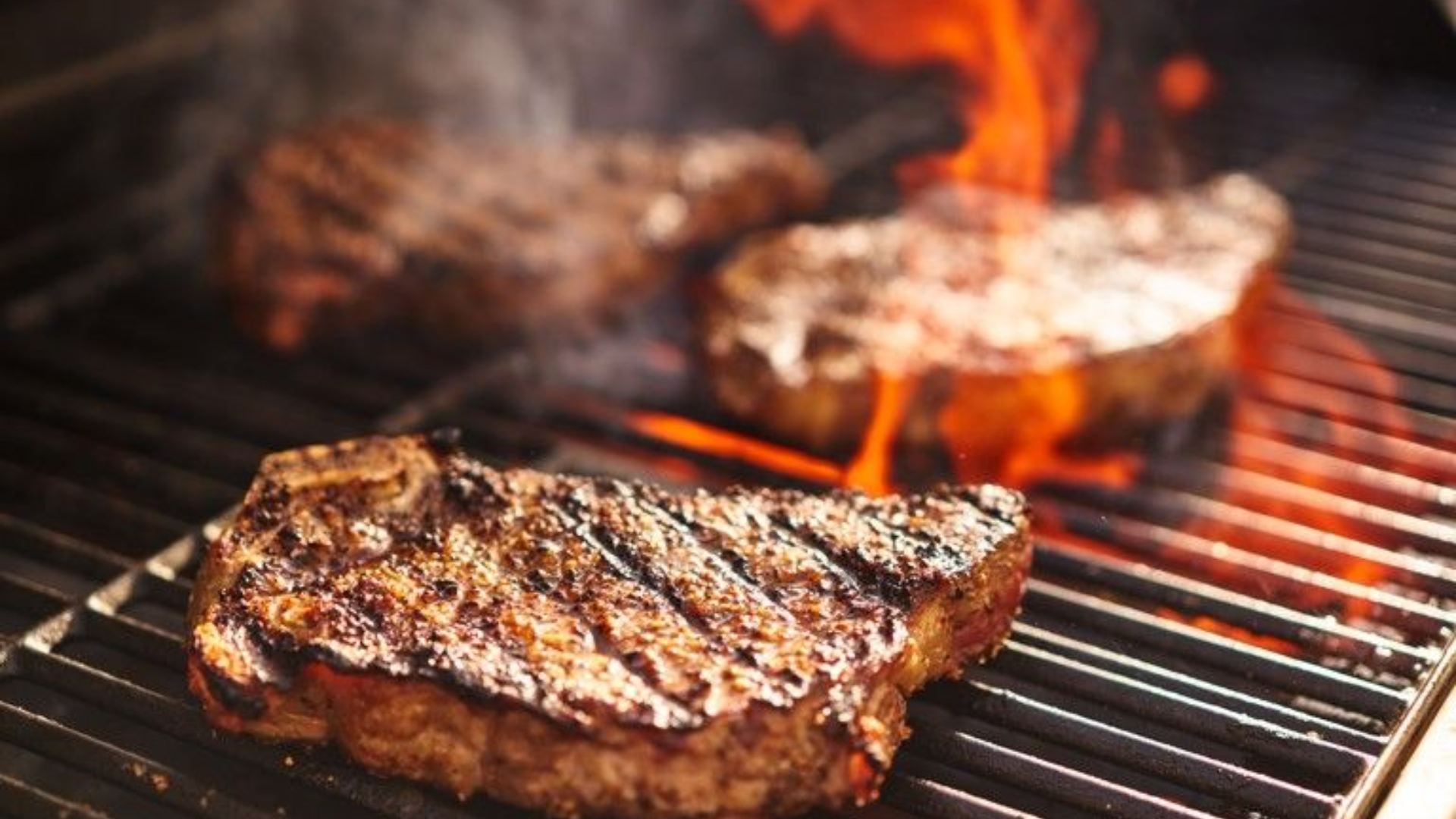
Reaction flavour plays an important role in the food industry.
Common applications of Reaction flavour
| Products | Primary application |
| Instant noodle | Enhances broth, meat, and vegetable flavour profiles |
| Snack | Delivers roasted, grilled, BBQ, and cheese notes |
| Seasonings | Adds flavour depth and reinforces umami perception |
| Sauces | Builds richer, meaty, brothy, and caramelized characteristics |
| Processes meat products | Restores and enhances flavour profiles after thermal processing |
| Plant-based foods | Recreates meaty and broth-like sensory characteristics without animal-derived ingredients |
| Bakery | Provides buttery, toasted bread, and roasted nut notes |
Reaction flavour complements rather than replaces food processing
Reaction flavour is not intended to replace traditional cooking or thermal processing. Instead, it is designed to complement food manufacturing by recreating, reinforcing, and refining flavour characteristics that may be difficult to achieve—or consistently maintain—through processing alone.
In modern product development, flavour is rarely created by a single ingredient or manufacturing step. It is the result of a carefully balanced combination of raw materials, processing conditions, seasoning systems, and flavour technology. Within this integrated approach, Reaction flavour serves as a strategic sensory tool, enabling product developers to fine-tune flavour profiles and deliver a more consistent consumer experience.
For this reason, Reaction flavour is increasingly regarded by food manufacturers as an integral part of a comprehensive sensory optimization strategy rather than simply another flavour ingredient.
Every successful food product begins with a sensory experience that consumers want to revisit. Among all sensory attributes, aroma is often the first impression—and one of the most challenging characteristics to reproduce consistently in large-scale food manufacturing.
Understanding the Maillard reaction reveals how desirable aromas are naturally generated during cooking. Understanding Maillard aroma explains the sensory characteristics that make roasted and cooked foods so appealing. Understanding Reaction flavour gives food manufacturers and R&D teams the ability to control, optimize, and consistently reproduce those flavour experiences under industrial production conditions.
Ultimately, consumers do not remember the name of a chemical reaction or the technology behind a flavour solution. They remember the irresistible aroma that creates anticipation before the very first bite—and the satisfying flavour experience that follows. That is precisely where flavour science transforms into consumer preference—and where Reaction flavour helps bridge the gap between culinary authenticity and industrial food production.